
Short version
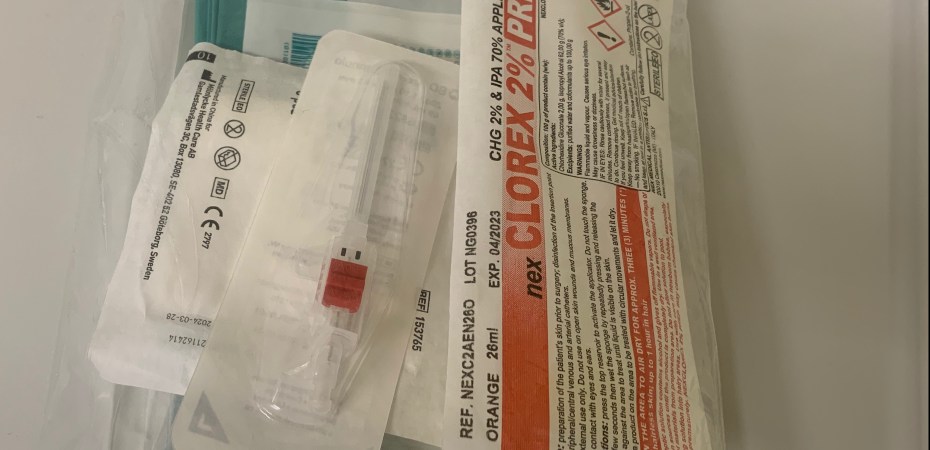
In an effort to install radial arterial lines in a more sterile fashion, I have made these pre-prepared “Art line kits”.
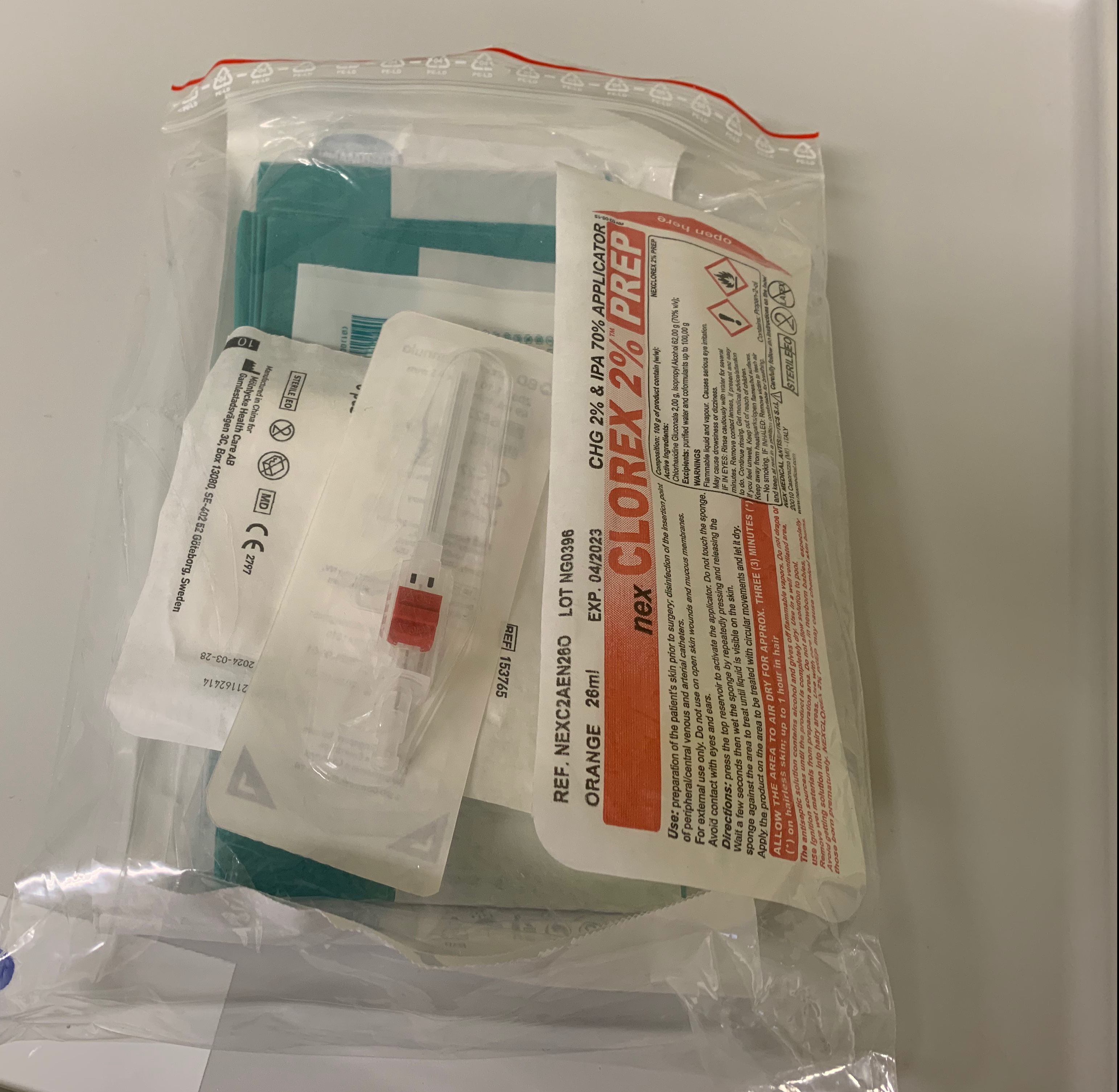
Each kit contains :
- One Chlorhexidine pen
- One fenestred sterile drape
- One Arterial line needle, 20G
- One pack of sterile gauze to clean with chlorhexidine
- One Tegaderm dressing
Long version
The amount of arterial line that I have installed in the last year has exploded. Now, for every sick patient, resuscitation, ROSC, high LLS or major trauma, my residents, ICU or I installed one.
They give so much more information. Real time blood pressure monitoring. Serial arterial gazes or blood tests without poking the patient. Can discriminate between pseudo-PEA or PEA.
But the average sterility preparation is bad. Very bad.
The dogma is the risk of catheter related bloodstream infection is low. But is it really? Anyone did a QI project on this at the Landspítali? Any chart review on it? I checked with an ID doctor and no, no one has studied it.
Even though it is true they might sound less at risk, they are still an invasive procedure directly in the bloodstream. They are often put in a rush, but we can usually afford a few minutes to put the extra sterility.
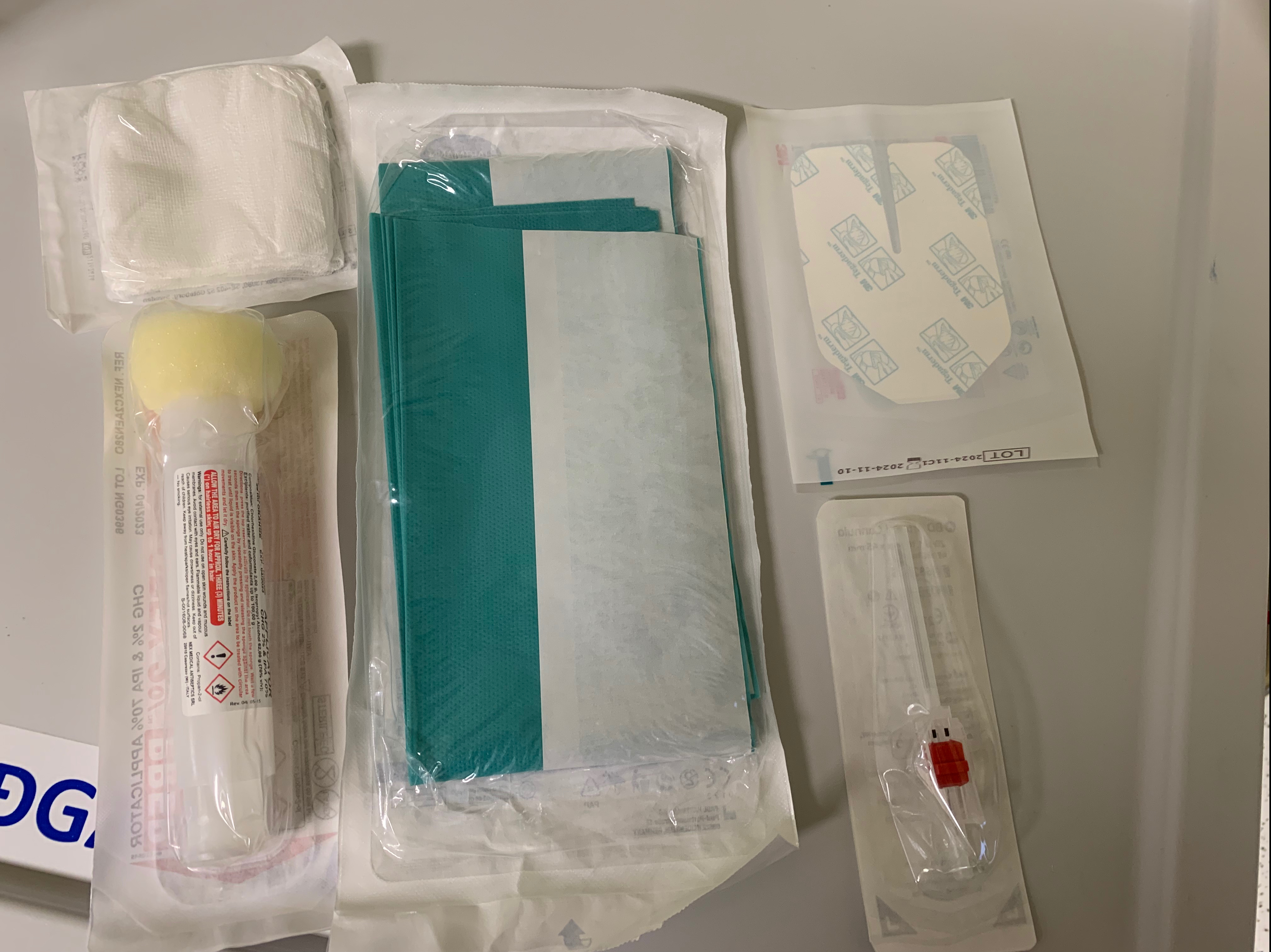
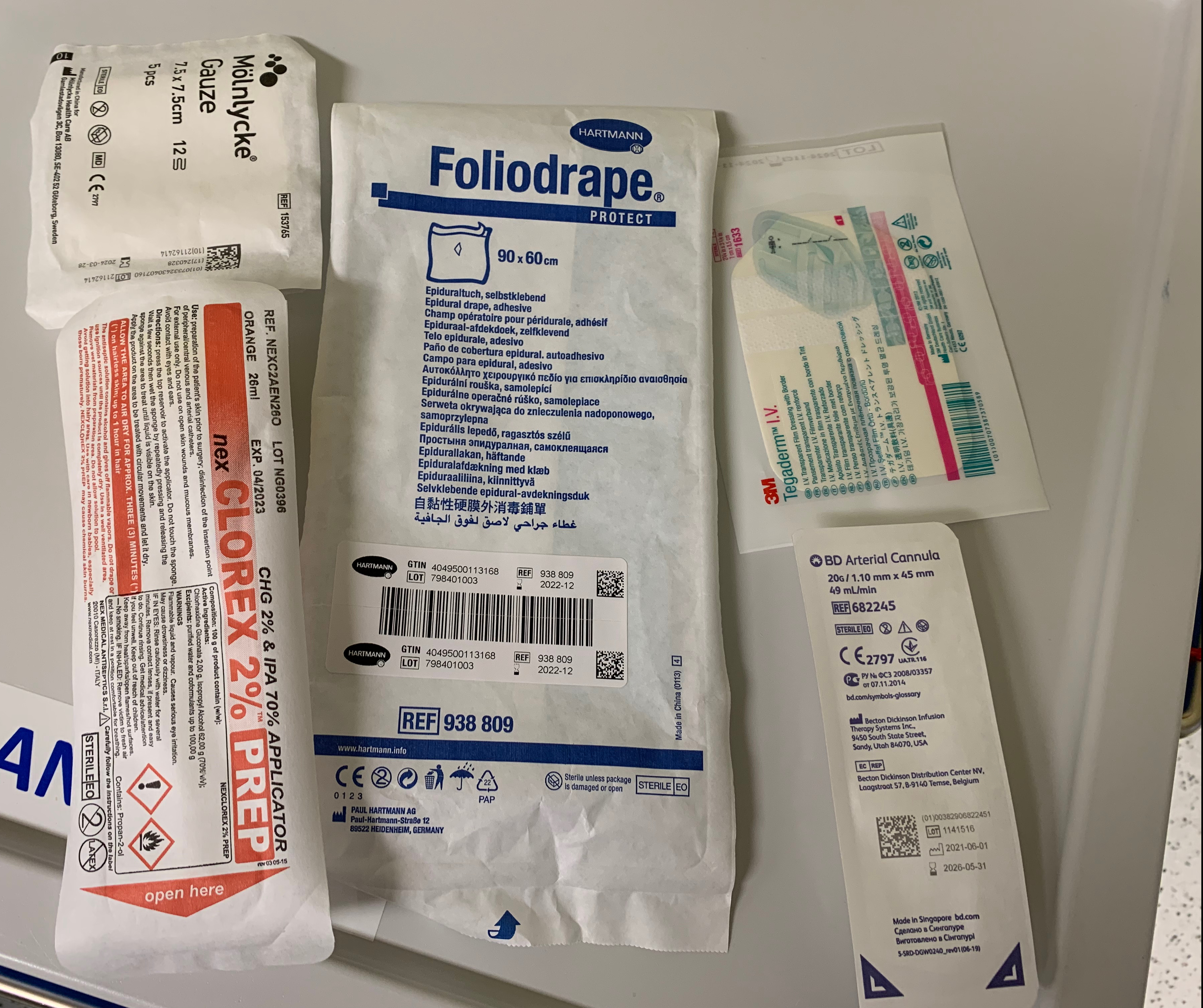
Each kit contains :
- One Chlorhexidine pen
- One fenestred sterile drape (“epidural drape”)
- One Arterial line needle (the classic 20G red needle)
- One pack of sterile gauze (use with chlorhexidine to clean the area before the dressing)
- One Tegaderm (occlusive dressing to cover the catheter)
The literature seems to say the rate of infection is low, but not zero, and might be underappreciated. In another study, the risk of colonization and catheter related was similar between arterial lines and central venous catheter. Also, when looking at studies, most of them at least had sterile gloves and some had a full sterile protection package. So you can’t say the risk is low, and because of this, not use sterile gloves and sterile field.
The CDC recommends :
A minimum of a cap, mask, sterile gloves and a small sterile fenestrated drape should be used during peripheral arterial catheter insertion . Category IB
Sterile gloves should be worn for the insertion of arterial, central, and midline catheters. Category IA
The CDC also say we can use clean gloves, non-sterile, if we dont palpate the area after asepsia. But my experience tells me I palpate after cleaning to know where I am going.
On an interesting note, in my recent locum at the Health Sciences North in Sudbury, Canada, the respiratory technicians were installing arterial lines. Need one? No problem, you call them and they come smiling and drop a line. Too bad because it is such a fine procedure to do. Anyway, they were doing this with sterile gloves, chlorexidine and a sterile field.
The recommendations and evidence seem to be clear. The peripheral arterial line is a potential source of infection. This procedure should be done clean with chlorhexidine and with the use sterile gloves and a sterile field.
This should be the minimum.
Do a favor to the patient, make the effort to be sterile.
Make ER Great Again. MEGA.
 Frozen Doc