
I guess we travel the world for some reasons.
To experiment different stuff, to see other cultures and confront our values to what we know.
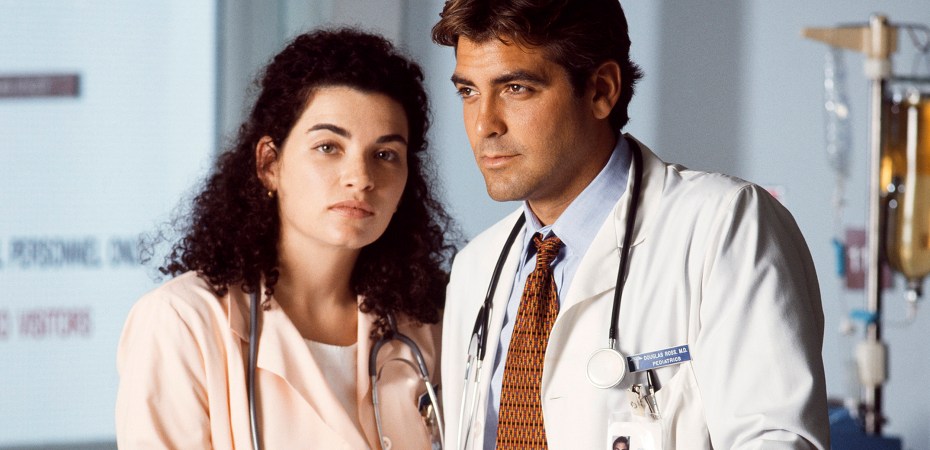
Reflecting on it, after 2 years in Iceland, my biggest professional cultural shock was the role of the ER physician within the hospital. To expand on the matter, I would like to take the management of the airway as an example.
Back home, that is in Canada, the emergency specialist needs to be competent with airway management. ER physicians are at the frontline and they are also at the center of the action. They will work in different settings, sometimes in remote places, single coverage and will see really sick patients. And they need to be prepare, well prepare.
Emergency medicine, as a definition
Before continuing into this direction, we need to go back, and start with what is emergency medicine.
Whichever way you go, it is usually defined as something like that :
“A field of practice based on the knowledge and skills required for the prevention, diagnosis and management of acute and urgent aspects of illness and injury affecting patients of all age groups with a full spectrum of undifferentiated physical and behavioural disorders.”
(International Federation for Emergency Medicine )
At the top of the emergency medicine food-chain-diagnosis-and-management-skill-set is the management of major trauma, cardiac resuscitation and intubation. They need to be resuscitation experts.
In this model, the bráðalæknir, the emergency physician like we call him here, will see the most acute and unstable patients because it is in their job description.
So by restraining ER physicians from intubating, we are creating a paradigm that conflicts itself, by stopping people to do a procedure that they need to be the most comfortable with.
Cultural shock / Scandinavian model
So this came as a surprise to me when, in Iceland, the ER specialist, without being forbidden to do it, should not really intubate and should consult anesthesiology every time.
This is mostly because we are heavily influence by the Scandinavian model, where anesthesiologists are at the front line of the critical cases, they work pre-hospital, in the ICU or in the OR, and they go down to the ER to intubate patients.
But this model is also based in a system where Emergency Medicine does not exist as a specialty. Up to recently, Sweden and Norway did not have ER specialists, they had internists or surgeons covering the department. So if there was a trauma patient that needed to be intubated, it makes sense to call anesthesiology for help, because I do not imagine the surgeon intubating that patient… (Here is a nice description of the Swedish ER model and how they are integrating emergency medicine…)
This contrast to the internationally accepted EM model that some of us are used to. In this model, the emergency physician is not a super-resident, but a true specialist that can evaluate patients on their own and manage them independently. This is the path that Iceland has decided to follow.
Going back to the Scandinavian model, it makes sense to call anesthesiology to intubate patients, since the other specialties are not trained for it.
But what about a hospital ecosystem where you train emergency specialists to deal with acute presentations?
How can this system accommodate for the “New kid on the block”, the ER specialist, the one dealing with emergencies, when you already have a specialty partially covering for it?
Where would the roles of each other start and end?
And how would you implement change?
Change is hard
I think Iceland is changing for two reasons.
The first is that many Icelanders trained in emergency medicine abroad where EM is a well engrained specialty (USA and New-Zealand). Countries where the ER physicians goes by the definition mentioned above. They are well oiled machines that are ready to confront really sick patients. And they came back home with a different view.
The second, is that the “in silo” type of medicine, the one that if you have abdominal pain you see the surgeon, and if you are short of breath you see the internist, just does not make sense. What if, after all, it was anxiety, do you also consult psychiatry? How many specialists do you need to treat a patient?
Before I studied emergency medicine, my years where I trained as a family physician are the ones that helped me the most now. They helped me to see patients as a whole, as complex machines with multiple variables interacting with each others. The “silo” approach is toxic and you need someone who can understand and manage complex situations.
I really think it is time to empower emergency medicine as a specialty in Iceland. We are training residents and soon enough they will be working independently in the department. Their diploma will be recognized internationally like the neurosurgeon in Sweden or the cardiologist in Canada.
They will become the best resuscitation experts in the hospital. They will be competent in managing acute presentation, traumas, cardiac arrests and of course, they will intubate in the ER.
Next post will be about the evidence of the ER physician intubating. Are we good at intubating? Are we better than we think? How often should should we intubate a year to maintain our competences? Can w do this?
Do not forget to Make ER Great Again. MEGA.
 Frozen Doc